No, I’m not joking. I swear that work, warmth, and Peter Parker’s arachnid hormones are related. Spoilers ahead.
Opening
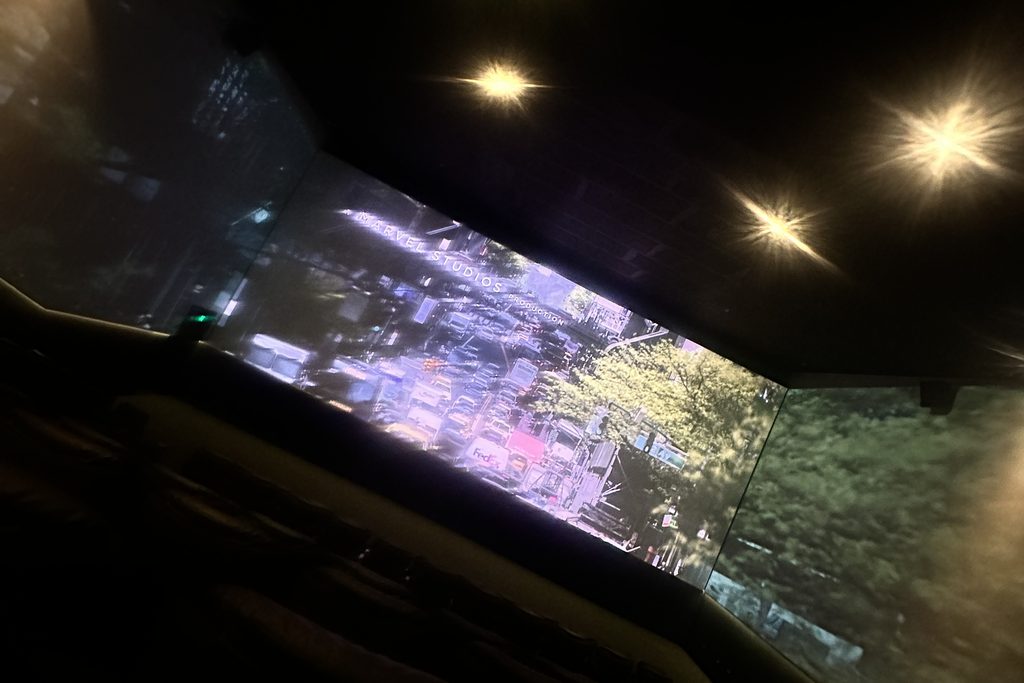
I’m not generally an action movie fan, but I watched Spider-Man: Brand New Day a few days ago (in early September 2026) and found it oddly… relatable. I’m not shooting webs or saving lives, but Spider-Man was surprisingly relevant to my work life. Here’s how.
Spoiler warning!!
This Diary contains spoilers. Don’t say I didn’t warn you.
The story: suppressing arachnid hormones
Much of the movie explores Spider-Man (Peter Parker)’s loneliness as he lives and works in solitude. When he sees his ex-girlfriend MJ kiss someone else, the emotional whiplash causes his arachnid hormones to spike, and his powers begin to spiral out of control. Rather than dealing with the root cause (his declining well-being), he builds an inhibitor to try suppress his arachnid side down to functional levels, but the inhibitor overheats and fails.
Well-being, work quality, & warning signs
I draw strong parallels between Peter’s overheating inhibitor and the dangers of suppressing my own needs in order to work.
In the story, Peter is suppressing his arachnid side, but his arachnid side is only flaring up because of his unmet needs (in this case, human connection). He chooses to bury himself in work instead, but the more he ignores these needs, the more his work quality suffers.
Over the years, I’ve found it very tempting to suppress the need for rest in service of a seemingly greater cause, but it’s become more and more clear to me that ignoring my own well-being to do more work is ultimately fruitless. It just prolongs my suffering and leads to burnout.
So I’ve been trying to learn that needs aren’t something to be minimised, and to reframe emotions as warning signs; an important signal that something needs to change in the way I work, rest, and play to continue doing what I do sustainably.
After all—using common turns of phrase—life is a marathon, not a sprint, and I can’t pour from an empty cup. When well-being declines, so does work quality along with it, so I’m learning to treat needs and emotions as signals from my body that it needs care.
The story: Spider-Man’s crash-out
While Peter is trying to save civilians, his arachnid side overpowers his human side, and he spirals out of control. He loses sight of what’s important, grows reckless, and injures the civilians he’s trying to protect.
Humanity orients skill
It’s no secret that technical skills are important. They’re the drivers of innovation. But one’s values—or Peter’s humanity—are what steer such innovation.
This idea—values guiding skill—applies quite broadly, so I’ll keep it general. What skills should I choose to learn? What causes should I use my skills to support? And, in today’s age, what technologies do we choose to create?
Okay, so far, baseline well-being and a set of core values (to orient my skillset) are crucial. But what else do I need to get to where I want to go?
The story: Frank backing Peter
Two things happen at multiple points throughout the movie: (1) Peter relies only upon himself, and (2) Frank Castle comes to his aid.
I can’t work alone
While I definitely see how this movie comments on the male loneliness epidemic, isolation in our digital era, and the harms of the patriarchy (the patriarchy harms men too!), I can also see it through a more general lens: it’s very hard to work alone.
I see parts of myself in Peter when he repeatedly refuses to rely on others. In his case, it’s probably the pressure he puts on himself as Spider-Man—he feels he must be the superhero others expect—in conjunction with what the world demands from him.
Working alone does have its benefits. When Peter’s dealing with ‘small potato’ threats, the agility of being one person does make sense. There’s this saying: when you want to go fast, you go alone. That’s true.
But, when you want to go far, you go together. That’s the full saying.
On a per-project basis, I’ve had to learn this time and time again, starting with past endeavours at school and during my first managerial role. Learning to receive others’ support has been a difficult but rewarding process.
Strength in numbers also applies on a more longitudinal note, when I feel disillusioned with what I’m doing. Per cancer specialist Dr Dominique Yoo Young Lee‘s memoir and advice, surrounding myself with like-minded people—people who also want social change, for example—has helped remind me why I’m trying to build skills in the first place.
What kinds of skills, though?
The story: Jean inside Peter’s memories
For context, Jean Grey, with her telepathic powers, is behind a lot of the damage Peter faces throughout the movie. At the movie’s climax, the two converse inside Peter’s memories of his late aunt May Parker, which is where he’s able to convince Jean to stop.
Warmth is a skill
Using his personal experiences, Peter helps Jean understand that she’s not alone. That he relates to her losses. Warmth is how he finally gets through to her.
Frankly—the fact that warmth is a professional skill—I needed this reminder. The same day I watched Spider-Man, for personal branding purposes, I asked my fellow committee members at Women in Publishing to describe who I am (and what my strengths are) in three words.
Beyond traditional work skills, their responses included descriptors like ‘amiable’ and ‘kind’. Those surprised me. Warmth is something I consider to be a strength in my personal life, but I’d overlooked it as part of a professional skillset.
(This was dumb, especially since I pride myself on creating work environments where people want to come back. Perhaps my oversight speaks to how soft skills are undervalued in the workplace. More on both another time?)
Anyways, no matter how technically proficient I try to be (or how strong your superpowers are, in the case of Peter and Jean), warmth is what creates the trust, buy-in, and connection necessary to get me where I want to go. Doesn’t matter whether it’s to gather support for an idea or to convince a fellow superhuman not to destroy New York City. Warmth matters.
Perspective-taking in storytelling
The nerd in me also finds the movie’s (very literal) use of perspective-taking as a storytelling device interesting. Perspective-taking, in psychology, is the skill of seeing something from another’s perspective. In the realm of storytelling, the audience understands the logic behind a story by seeing it through its characters’ eyes.
Jean experiences Peter’s memories of his aunt May from Peter’s point of view—Jean quite literally takes Peter’s perspective—which helps her feels comforted and understood. It also helps the audience empathise with her further
Jean and Peter have reminded me that storytelling is, perhaps, my greatest tool for creating understanding, building emotional resonance, and, ultimately, human connection.
(Guess that’s why I’m writing these Diaries!)
Closing
Honestly, I’m surprised I even wrote this. I went into the movie theatre thinking I’d enjoy the balance between emotive storytelling and action—which I did—but somehow got an unexpected refresher on how to work and live sustainably on top of it.
Can’t complain.
Leave a Reply